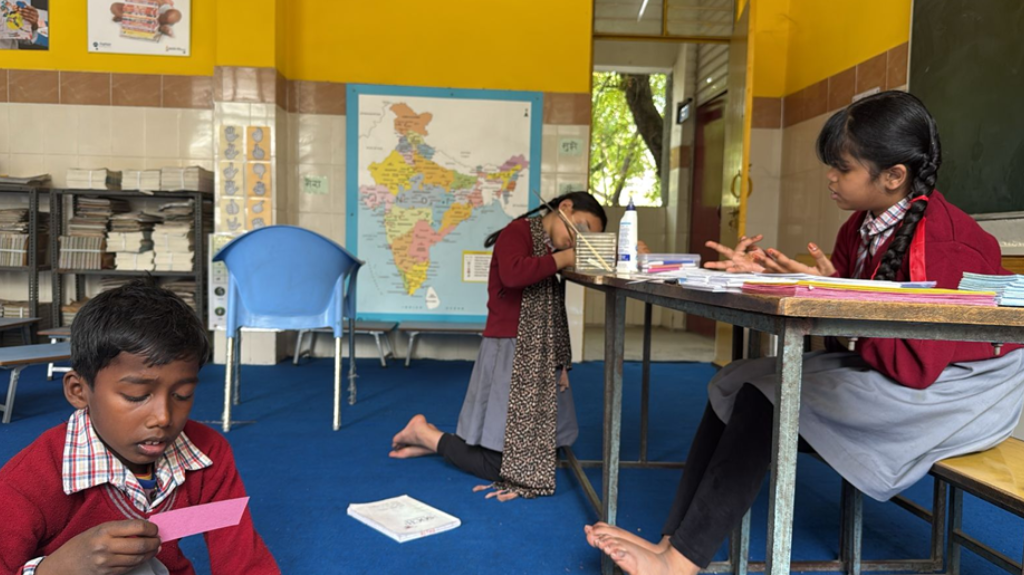
At the Soch Foundation, our approach to learning disability and remediation is holistic, inclusive, and deeply collaborative. We work closely with schools, teachers, students, and parents to ensure that every child receives the support they need to learn, grow, and thrive within the mainstream education system.
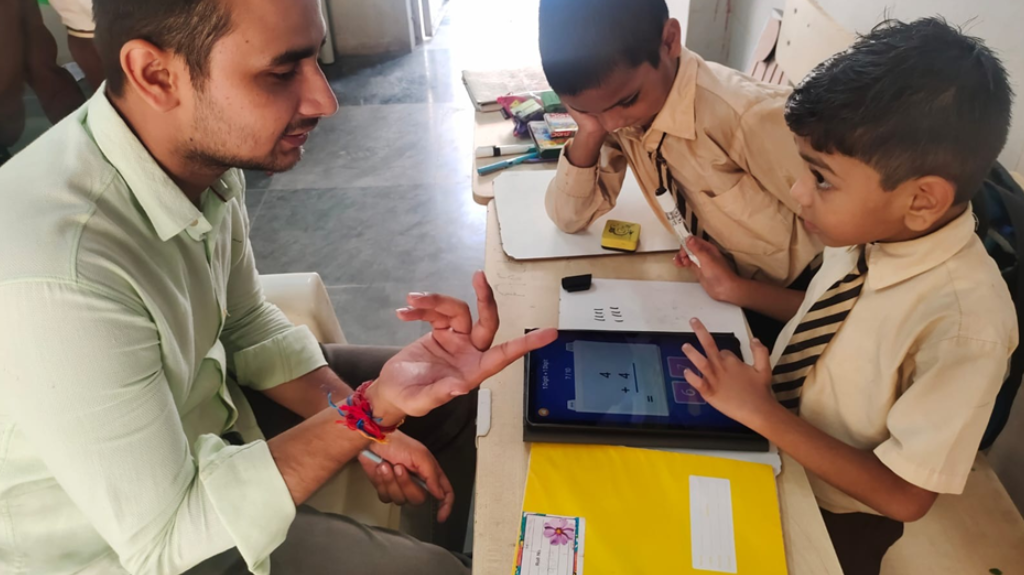
Holistic Intervention
Our educators are assigned schools, where they begin with classroom observations and discussions with teachers. Based on these insights, students who may be at risk, are identified and assessed using contextual and child-appropriate academic tools. An Individual Education Plan (IEP) is then developed for each student. In line with the RPWD Act, we provide examination support to assessed and diagnosed students. This includes scribes and alternative question papers wherever required and ensures fairness and equal opportunity during assessments. Inclusion is central to our philosophy. We ensure that students we support are fully integrated into all school activities, especially Sports Days and Annual Days. Every milestone, no matter how small, is celebrated. Certificates recognising progress are presented during assemblies or public events, significantly boosting students’ confidence and self-esteem.All this ensures a belief in the students ability, prevents academic disengagement and also cuts down dropout rates.
Innovative Pedagogy
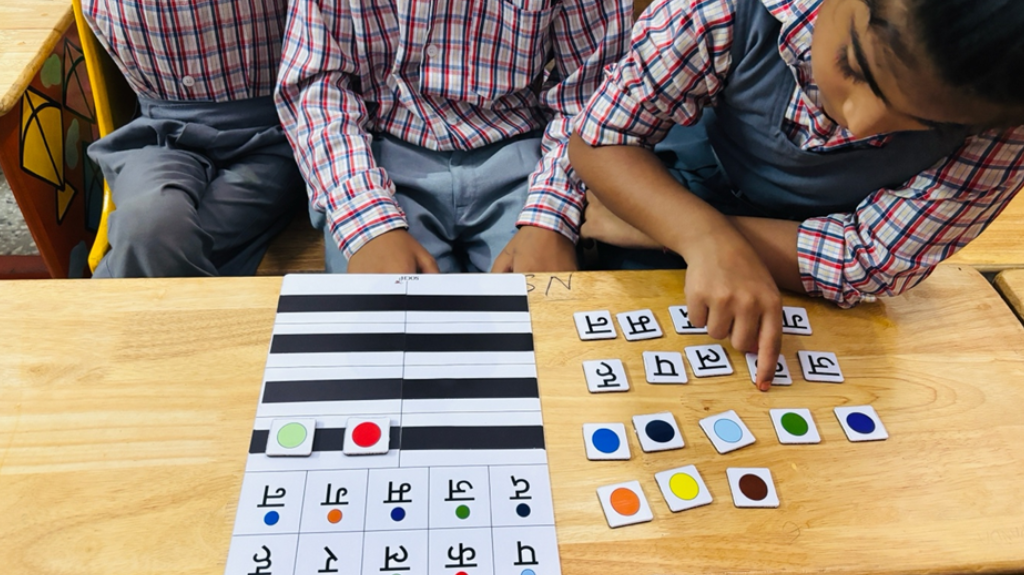
We remediate in the students’ first language and mathematics. With a focus on developing numeracy and literacy. We realize that for our work to be meaningful we need resources in Hindi and not much is easily available, so we create low cost teaching aids in Hindi. The tools we create are engaging and they capture the attention of the child, making learning enjoyable. Specially designed TLMs are essential in remediation because children with learning difficulties learn differently and require instructional tools that match their individual strengths, challenges, and learning styles. Generic classroom materials often assume grade-level readiness, uniform pace, and abstract thinking skills—which many children in remedial settings are still developing. Customized TLMs allow educators to break concepts into smaller, concrete, and visually supported steps, making learning accessible, engaging, and less overwhelming. They help build perception, memory, attention, sequencing, and fine-motor skills—areas that frequently require targeted strengthening. These materials also make lessons multisensory, ensuring that children can touch, see, hear, and manipulate content rather than passively listen or copy from the board.
Capacity Building and Advocacy
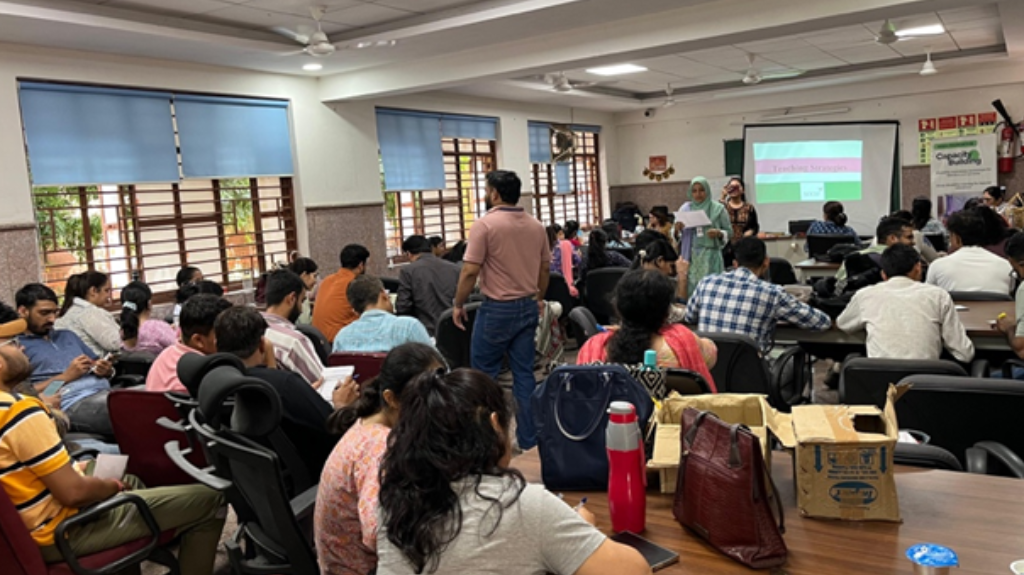
Capacity building is central to the sustainability of our work. We believe that lasting impact is achieved when all stakeholders are equipped with the knowledge, skills, and the confidence to support inclusive education. We work closely with teachers, through workshops and training programmes, to build an understanding of learning disabilities, inclusive classroom practices, and differentiated instruction. We actively engage with parents, helping them understand their child’s learning needs, reducing absenteeism, and reinforcing learning at home. Where required, we also collaborate with school leadership to sensitise them to inclusive policies and practices, ensuring that support systems are embedded within the school structure. Through continuous capacity building, we strengthen schools from within—creating environments where inclusion is understood, embraced, and sustained.
We have conducted:
- • Multiple cross disability trainings for special educators
- • Trainings for Primary School Teachers across all Zones on Understanding Disability
- • Extensive training at multiple levels of all stake holders during World Dyslexia Month
- • Intensive online and offline certified courses.
Inclusiveness (the only way to be)
The purpose of education is also to teach acceptance of diversity and difference. One of our main objectives is to help the students integrate in the class not only academically but socially and emotionally too. Acceptance by the classmates goes a long way in building self esteem and towards this end the educators of the Soch Foundation engage with children in an integrated manner using the medium of dance, sports and various play activities. They conduct sessions with the peer group of the supported students.